
Why Hands-On Learning Works Best for Toddlers
Toddlers don’t learn best by sitting still and listening—they learn by touching, exploring, copying, and doing. At this age, their brains are developing at lightning speed, and every sensory experience helps build language, recognition, coordination, and confidence.
That’s why hands-on learning is one of the most effective ways to teach toddlers. When learning feels like play, children stay engaged, participate more, and remember what they discover.
What Is Hands-On Learning for Toddlers?
Hands-on learning (also called interactive or play-based learning) is when toddlers learn through experiences they can physically engage with.
Examples include:
singing with actions
sensory bins and messy play
matching games and sorting activities
building blocks and stacking toys
pretend play and role-playing
group circle time with participation
art projects using multiple materials
Instead of being told what something is, toddlers discover it for themselves—and that makes learning stick.
5 Big Reasons Hands-On Learning Works So Well
1. Toddlers Learn Through Their Senses
Toddlers understand the world by seeing, touching, hearing, and moving. When they hold a shape, feel a texture, or move to a song, their brain creates stronger connections.
A simple example:
A toddler who touches and stacks three red blocks learns “red,” “three,” and “tall” faster than one who simply hears the words.
Hands-on learning turns concepts into real experiences.
2. Interactive Activities Build Communication Skills
Toddlers need chances to use their voices. Hands-on group activities naturally encourage:
asking for turns
naming objects
copying new words
responding to friends
expressing feelings
When a child is excited and involved, they are more likely to talk—whether that’s through words, gestures, or sounds. Over time, those small interactions grow into confident communication.
3. Movement Improves Memory and Recognition
Toddlers remember more when learning includes movement. Their bodies help their brains.
For example, a toddler who:
jumps on a shape mat
claps to count
points to picture cards in a group game
…is practicing recognition and memory while staying engaged.
Instead of passive learning, their whole body is part of the lesson.
4. Hands-On Learning Keeps Toddlers Focused Longer
Toddlers naturally have short attention spans. But when they are actively involved—especially with friends—they can focus much longer.
Why? Because hands-on learning is:
fun
meaningful
exciting
social
It turns learning into something toddlers want to do, not something they’re being forced to sit through.
5. It Builds Confidence, Independence, and Social Skills
Interactive learning teaches toddlers more than letters, colors, or words. It also teaches life skills like:
trying again
solving problems
working with others
celebrating small wins
feeling proud of effort
When toddlers get to explore and succeed through play, they build confidence that lasts far beyond the classroom.
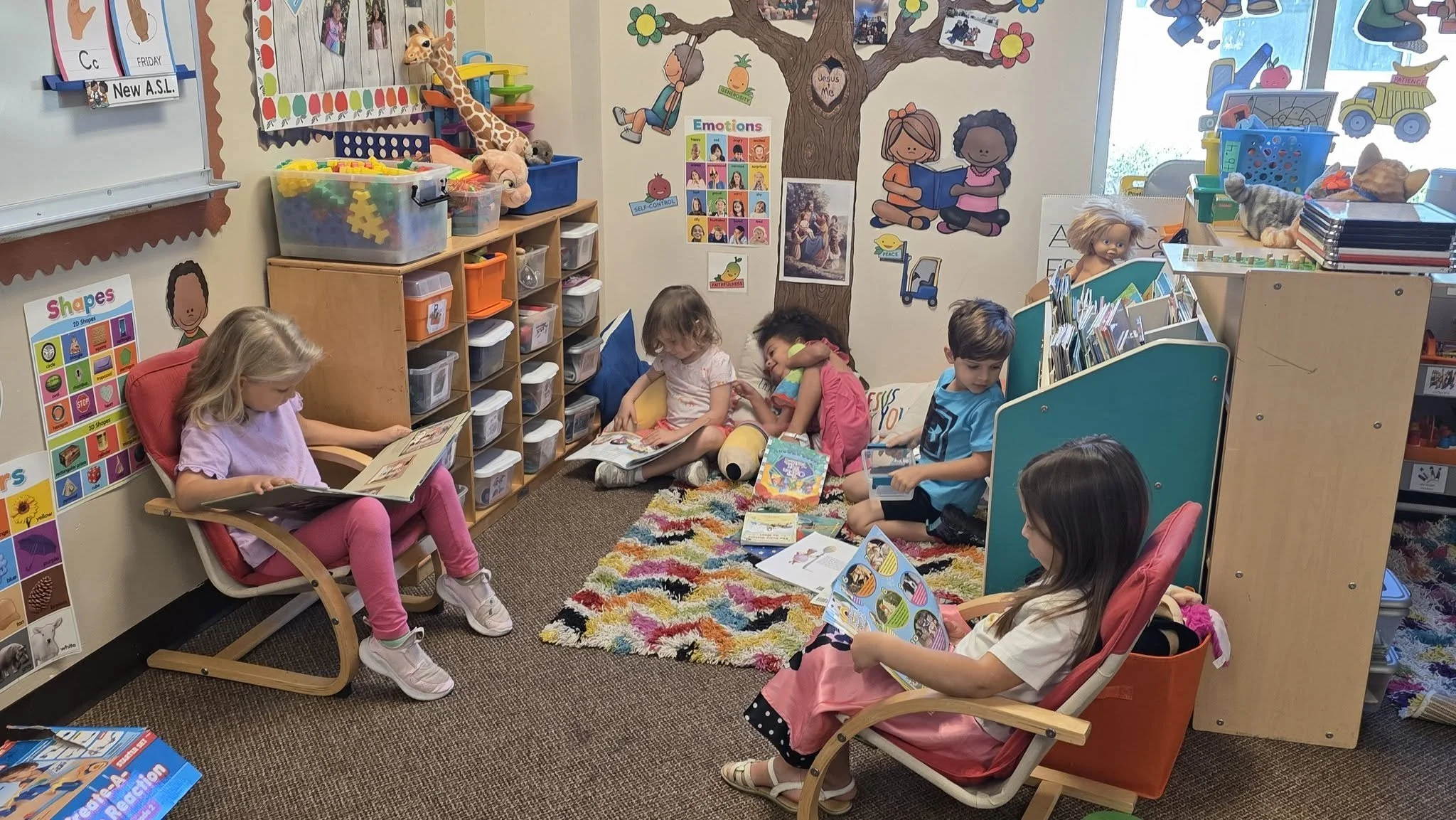
What Hands-On Learning Looks Like in Our Toddlers Class
In our Toddlers Class, hands-on learning happens every day through engaged group activities focused on verbal communication and recognition skills.
Some favorite examples:
Circle-time games that encourage listening and speaking
Matching and sorting activities for color, shape, and object recognition
Action songs that connect words to movement
Group sensory play that builds vocabulary through exploration
Partner play to practice turn-taking and social cues
We believe toddlers learn best when learning feels like hands-on fun.
How Parents Can Support Hands-On Learning at Home
You don’t need fancy tools—just simple play moments that invite learning.
Try:
letting your toddler help pour, scoop, or sort while cooking
naming objects during bath time (“cup,” “water,” “big,” “small”)
playing “find the color/shape” around the house
singing songs with actions
reading books and pointing together
giving choices (“Do you want the red ball or blue ball?”)
Every playful interaction becomes a learning moment.
Final Thoughts
Hands-on learning works best for toddlers because it matches how they are designed to grow—through movement, curiosity, and play. It strengthens language, recognition, memory, focus, and confidence in a way traditional sit-and-listen learning simply can’t.
When toddlers are engaged, interactive, and having fun…
they learn more—and love learning.