
Is your child ready for kindergarten? The answer may begin with something as simple as singing, clapping, and dancing!
When parents think about kindergarten readiness, they often focus on recognizing letters, counting numbers, writing names, and identifying colors. While these academic skills are valuable, preparing children for kindergarten involves much more.
Children also need to develop listening skills, follow directions, coordinate their movements, express emotions, and participate confidently in group activities.
And one of the most enjoyable ways to practice these essential skills is through music and movement activities for preschoolers.
At Abagtha Academy in Denton, Texas, we recognize that children learn through meaningful, engaging experiences. Our Music in Motion program introduces opportunities for children to explore rhythm, movement, creativity, and social interaction while supporting their early development.
Let's explore how music and movement can help prepare your child for a successful transition into kindergarten.
1. Music Helps Develop Listening and Attention Skills
Before children can follow classroom lessons, they need to learn how to listen.
Listening is an essential kindergarten readiness skill. Children use it to understand instructions, participate in conversations, recognize important information, and respond appropriately during classroom activities.
Music naturally encourages active listening.
When preschoolers participate in songs, they begin recognizing patterns, anticipating changes in rhythm, and responding to musical cues.
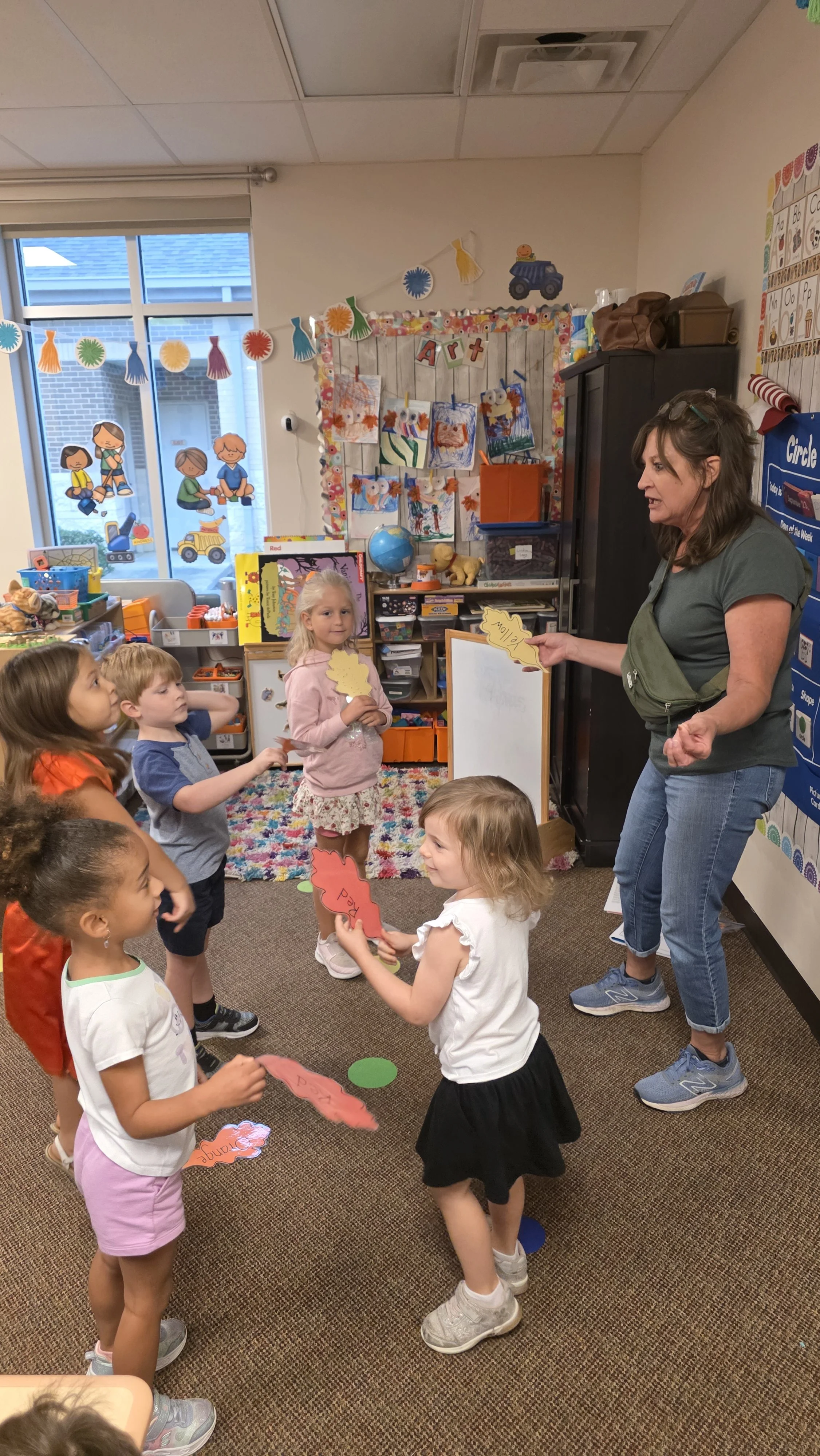
For example, during a stop-and-go music activity, children practice:
Listening for changes in sound.
Paying attention to instructions.
Recognizing when to move or stop.
Practicing patience and self-control.
Responding to verbal and musical signals.
These playful experiences give children opportunities to practice the attention and listening skills they'll use throughout kindergarten.
Parent Tip: Play a familiar song at home and pause it unexpectedly. Encourage your child to freeze when the music stops and move when it starts again.
2. Singing and Movement Encourage Following Directions
Can your child follow two or three simple instructions in sequence?
Following directions is an important part of kindergarten readiness.
Throughout the school day, children may be asked to put away supplies, line up, wash their hands, or transition between classroom activities.
Music and movement make practicing these skills enjoyable.
Songs that include actions such as clapping, jumping, turning around, and touching different body parts encourage children to listen, remember, and respond.
Through these activities, preschoolers can practice:
Understanding simple instructions.
Remembering the order of actions.
Following multi-step directions.
Recognizing classroom routines.
Developing independence and confidence.
For example, a teacher might say:
"Clap your hands twice, turn around, and sit down."
Children must listen carefully, remember the sequence, and coordinate their actions.
At Abagtha Academy, our Music in Motion program provides playful opportunities to practice listening and responding through music-based experiences.
3. Music and Movement Support Physical Coordination
Kindergarten involves more physical activity than many parents realize.
Children need coordination and body awareness to participate in classroom games, navigate playground equipment, use learning materials, and manage everyday routines.
Music and movement activities help children practice both gross and fine motor skills.
Gross Motor Skills
Gross motor skills involve larger muscle groups used for activities such as:
Running and jumping.
Dancing and marching.
Balancing and stretching.
Moving in different directions.
Coordinating arms and legs.
Dancing to music gives children opportunities to develop balance, rhythm, and body awareness.
Fine Motor Skills
Fine motor skills involve smaller movements, especially those involving the hands and fingers.
Activities such as fingerplays, clapping patterns, and handling simple musical instruments can support the development of hand coordination.
These abilities are important for tasks such as drawing, using classroom tools, and beginning handwriting.
Parent Tip: Create a family dance party! Encourage your child to move slowly, quickly, sideways, and backward while following the music.
4. Group Music Activities Build Social Skills
Kindergarten isn't just about learning ABCs and 123s. It's also about learning how to be part of a classroom community.
Children entering kindergarten benefit from opportunities to practice cooperation, turn-taking, communication, and participation in group activities.
Music creates a natural environment for these experiences.
When children sing, dance, and play musical games together, they can practice:
Taking turns with instruments.
Sharing materials with classmates.
Listening to others.
Participating in group activities.
Respecting personal space.
Working together toward a shared goal.
For example, a simple rhythm circle allows children to take turns creating a beat while their classmates listen and respond.
These interactions help children become more comfortable participating in group settings.
At Abagtha Academy, we value learning experiences that encourage positive relationships, communication, and cooperation among young learners.
5. Music Encourages Emotional Expression and Confidence
Starting kindergarten is an exciting milestone, but it can also bring unfamiliar experiences.
Children may encounter new teachers, classmates, routines, and expectations.
Developing emotional awareness and confidence can help them navigate these changes.
Music offers children another way to explore and express their feelings.
A cheerful song might encourage excitement and participation, while gentle music may create opportunities for relaxation.
Through musical experiences, children can practice:
Identifying different emotions.
Expressing feelings appropriately.
Developing confidence through participation.
Practicing self-regulation.
Building comfort with new activities.
One of the beautiful things about music is that children can participate in different ways.
Some children may love singing aloud, while others prefer clapping, moving, or quietly listening.
Encouraging each child's participation helps create a positive learning experience.
6. Rhythm and Repetition Support Early Learning
Have you ever noticed how quickly children remember the words to their favorite songs?
Music often includes repetition, patterns, and predictable sequences that make information easier to practice and recall.
These features can support foundational early learning skills.
Language Development
Singing introduces children to vocabulary, rhyming words, syllables, and sound patterns.
These experiences can help strengthen language awareness, an important foundation for early literacy.
Early Math Concepts
Rhythm activities provide opportunities to explore:
Counting beats.
Recognizing patterns.
Comparing fast and slow.
Understanding sequences.
Identifying similarities and differences.
Memory and Sequencing
Remembering song lyrics and movement patterns gives children opportunities to practice recalling information in order.
While music alone does not guarantee academic success, it can complement other developmentally appropriate learning activities.
7. Music in Motion Makes Kindergarten Preparation Fun
Children learn best when they feel engaged, supported, and excited to participate.
Kindergarten preparation doesn't have to involve worksheets or structured academic lessons all day.
Playful activities can help children develop essential skills while nurturing curiosity and creativity.
Music and movement bring together several areas of development in one engaging experience.
A single musical game may encourage a child to listen, follow directions, coordinate movements, remember patterns, and cooperate with classmates.
At Abagtha Academy, our Music in Motion program reflects our commitment to making early childhood learning meaningful and enjoyable.
By incorporating music and movement into children's learning experiences, we help create opportunities for growth that extend beyond traditional academics.
5 Easy Music and Movement Activities Parents Can Try at Home
Want to help your child practice kindergarten readiness skills outside the classroom?
Here are five simple activities you can enjoy together.
1. Freeze Dance
Play music and encourage your child to dance. Pause the music and ask them to freeze.
Skills practiced: Listening, attention, coordination, and self-control.
2. Follow the Leader
Take turns leading movements such as clapping, marching, hopping, and stretching.
Skills practiced: Following directions, imitation, and social participation.
3. Clap the Pattern
Create a simple clapping rhythm and ask your child to repeat it.
Skills practiced: Memory, listening, sequencing, and pattern recognition.
4. Sing and Count
Use familiar counting songs while encouraging your child to clap or move along.
Skills practiced: Counting, rhythm, language, and early math awareness.
5. Musical Feelings
Play music with different moods and ask your child how each piece makes them feel.
Skills practiced: Emotional awareness, communication, and self-expression.
These activities require little preparation and can turn everyday family time into meaningful learning opportunities.
Why Kindergarten Readiness Is About More Than Academics
Every child develops at their own pace.
Some children may recognize letters early, while others demonstrate strengths in communication, creativity, movement, or social interaction.
True kindergarten readiness involves supporting the whole child.
That includes:
Cognitive and early academic development.
Language and communication skills.
Physical coordination.
Social and emotional development.
Independence and classroom participation.
Music and movement can support several of these areas while allowing children to learn through play.
The goal isn't to rush childhood or expect every child to master the same skills at the same time.
It's to provide supportive opportunities for children to explore, practice, and grow.
Discover Music in Motion at Abagtha Academy in Denton, TX
Little songs can inspire big learning moments! 🎵
At Abagtha Academy, we believe early childhood education should nurture curiosity, creativity, confidence, and a lifelong love of learning.
Our Music in Motion program offers opportunities for children to experience the joy of music while practicing important developmental skills.
From listening and coordination to cooperation and self-expression, music and movement can play a valuable role in preparing children for their next educational milestone.
If you're searching for a preschool in Denton, Texas, that values well-rounded early childhood development, we'd love to introduce you to Abagtha Academy.
🎶 Give Your Child a Joyful Start to Learning!
Discover how Abagtha Academy combines music, movement, and meaningful early childhood experiences to help little learners grow.
Contact Abagtha Academy today to learn more about our preschool programs and Music in Motion activities!